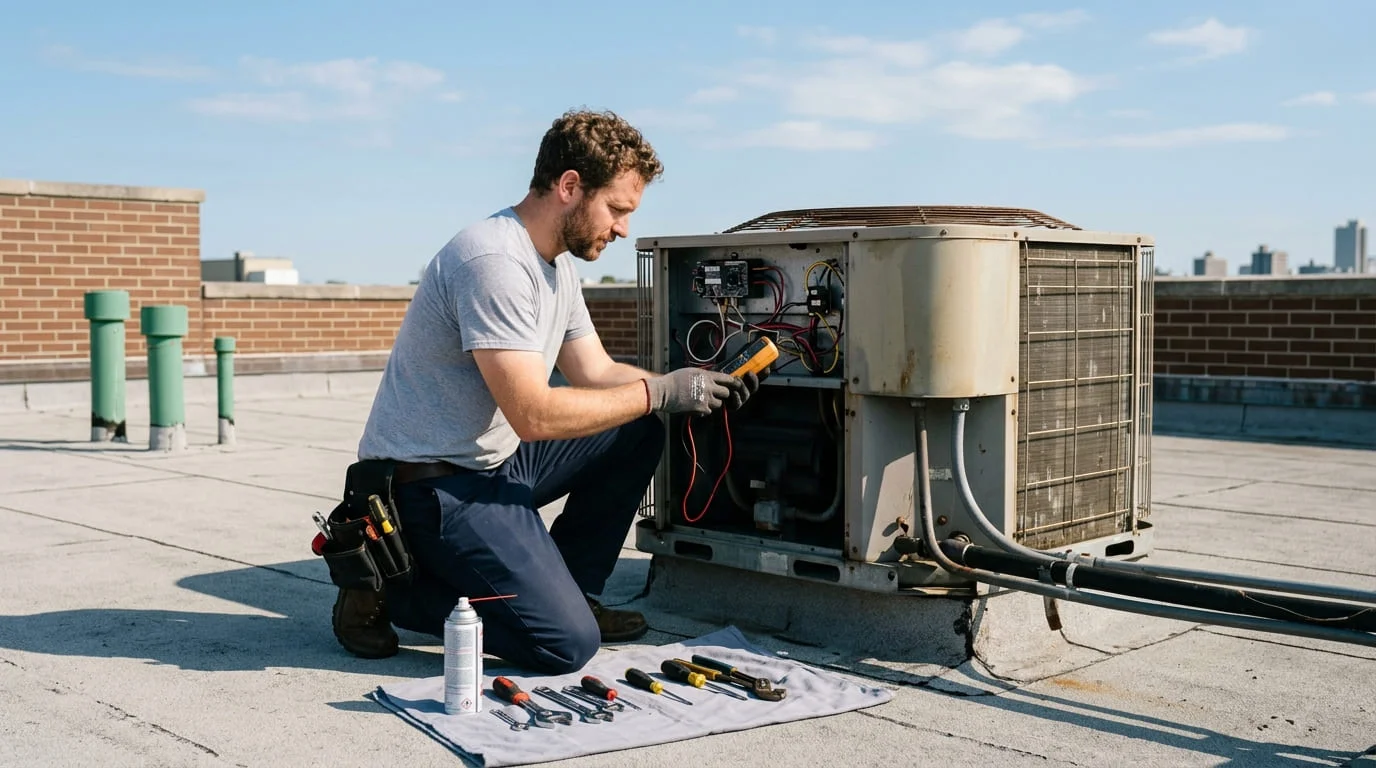
Your HVAC system rarely fails without warning. The breakdown that leaves your family in 97°F heat on a Friday afternoon almost always follows weeks of subtle signals. Here are the five most important warning signs that your system needs attention before it becomes an emergency.
1. Weak Airflow from Registers
Hold your hand in front of a few supply vents when the system is running. The airflow should feel strong and consistent. Weak airflow is one of the most common early HVAC warning signs and can indicate:
- A clogged air filter (fix this yourself: check it monthly)
- A failing blower motor
- Collapsed or disconnected ductwork
- A freezing evaporator coil caused by refrigerant issues
Start by changing your filter. If airflow doesn't improve, call for a professional inspection. HVAC maintenance service.
2. Unusual Noises
A properly functioning HVAC system is relatively quiet: a low hum when running and a click when it cycles on and off. Any of the following sounds warrants immediate attention:
- Squealing or screeching: Usually a failing blower belt or motor bearing. Service it before the motor seizes completely.
- Banging or clanking: A loose or broken component inside the air handler or compressor. Shut the system off and call immediately.
- Clicking that continues after startup: May indicate a failing relay or control board
- Hissing near the air handler: Often a refrigerant leak, a serious issue requiring a licensed technician
3. Hot and Cold Spots Throughout the House
If some rooms in your Killeen home are consistently too warm while others are comfortable, the system has an airflow or zoning problem. Common causes include:
- Ductwork leaks losing conditioned air into the attic or crawlspace
- Undersized return air grilles creating pressure imbalances
- Dirty coils reducing the system's total cooling capacity
- A thermostat in the wrong location getting false readings
In Killeen's intense summer heat, even mild airflow imbalances become serious comfort problems. A duct inspection and balancing can resolve this without replacing equipment. AC repair and duct service.
4. Skyrocketing Utility Bills
Compare your current electric bill to the same month last year. A significant increase, more than 15 to 20 percent higher than prior years for similar weather, often means your HVAC system is running inefficiently. This is usually caused by:
- Dirty evaporator or condenser coils making the system work much harder
- Low refrigerant charge reducing efficiency dramatically
- A failing capacitor causing the compressor to draw excess current on startup
- A system that's simply aging and losing efficiency (10+ year old systems lose significant efficiency each year)
In Killeen's climate, HVAC typically represents 50 to 60 percent of your total electric bill in summer. A tune-up that restores efficiency often pays for itself within one or two billing cycles.
5. Short Cycling: The System Turns On and Off Too Frequently
Your HVAC system should run in cycles of 10 to 20 minutes. If it's turning on, running for 2 to 3 minutes, shutting off, and starting again quickly, it's short cycling. This is hard on your compressor (the most expensive component) and means your home never fully dehumidifies because the system doesn't run long enough to pull moisture out of the air.
Short cycling causes include an oversized system, a dirty air filter, a refrigerant leak, a frozen evaporator coil, or a failing thermostat. Don't ignore it. Short cycling accelerates compressor wear significantly.
6. Musty, Burning, or Chemical Odors When the System Runs
Your nose can catch problems before your ears or eyes do. In Killeen homes, a few smells are worth paying attention to:
- Musty or mildew smell: Usually moisture sitting in the ductwork or on the evaporator coil, often from a clogged condensate drain. In Central Texas humidity, mold can establish itself in ducts within days of standing water.
- Burning or "hot dust" smell at startup: Normal for the first few minutes of the season as dust burns off heating elements, but if it persists past a few minutes or returns during cooling season, it can indicate a failing motor or electrical component overheating.
- Sharp, chemical, or "nail polish" smell: This can indicate a refrigerant leak. Refrigerant exposure isn't something to live with — turn the system off and call for service.
Building a Simple HVAC Maintenance Schedule for Your Killeen Home
Most HVAC failures we see in Killeen come down to homeowners not having a routine, not because the work itself is complicated. A simple schedule looks like this:
- Monthly (May–September): Check and replace the air filter, glance at the outdoor unit for debris
- Spring (March–April): Professional tune-up before the cooling season starts, including coil cleaning and refrigerant check
- Fall (October–November): Second tune-up before heating season, plus a condensate drain flush
- Anytime: If you notice any of the five warning signs above, schedule a service call rather than waiting for the next routine visit
Homeowners who follow this schedule rarely experience an emergency breakdown during the worst heat of summer, and their systems consistently last toward the higher end of their expected lifespan.
Don't Wait for a Breakdown
In Killeen's climate, an HVAC breakdown in July or August isn't just uncomfortable. It can be dangerous for young children, elderly residents, and anyone with respiratory conditions. The cost of a proactive maintenance visit is a fraction of an emergency repair or system replacement.
Call A Better Handyman at (254) 323-2646 to schedule HVAC maintenance before the heat peaks. We serve the entire Killeen and Fort Cavazos area.